Basic Information

Bohr Model
Static
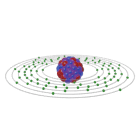
Interactive
Descriptive Numbers
CAS Number
7440-34-8
Mendeleev Number
14
Pettifor Number
48
Space Group Number
225
Glawe Number
33
Mass
Atomic Mass
227 Da
Periodic Position
X Position
4
Y Position
9
Period
7
Group
N/A
Classification
Block
f
Category
Actinides
Geochemical
U/Th decay series
Goldschmidt
Synthetic
Abundance
Earth Crust
5.5e-16 g
Meteorites
N/A %
Color
Jmol
#70ABFA
Molcas Gv
#70ABFA
CPK
#FFFFFF
Atomic Radius
Empirical
195
Rahm
293
Uff
347.8
Mm3
308
Alvarez
280
Covalent (Triple Bound)
140
Covalent (Cordero)
215
Covalent (Pyykko)
186
Covalent (Pyykko Double)
153
Covalent (Pyykko Triple)
140
Temperature
Melting/Freeze (USE)
1500 °K
Melting/Freeze (WEL)
1323 °K
Melting/Freeze (CRC)
1324 °K
Melting/Freeze (LNG)
1323 °K
Boiling/Density (USE)
3500 °K
Boiling/Density (WEL)
3573 °K
Boiling/Density (CRC)
3471 °K
Boiling/Density (LNG)
3473 °K
Density
STP
10 kg/cm³
Solid (WEL)
10070 kg/cm³
Solid (CRC)
10000 kg/cm³
Solid (LNG)
10070 kg/cm³
Heat
Molar Volume
22.55 cm³/mol
Atomic Volume
22.54 cm³
Heat Of Fusion USE
10.5 kJ/mol
Heat Of Fusion WEL
14 kJ/mol
Evaporation USE
292.9 kJ/mol
Evaporation LNG
18.1 kJ/mol
Evaporation WEL
17 kJ/mol
Molar Heat
27.2 J/molK
Heat Capacity CRC
27.2 J/gK
Heat Capacity LNG
27.2 J/gK
Heat Capacity WEL
27.2 J/gK
Adiabatic Index
N/A
Etymology
Description
It is a silvery, radioactive metal element found in the third group of the periodic table. Its most stable isotope, Ac-227, has a half-life of 217 years. Ac-228 (with a half-life of 6.13 hours) is also found in nature. There are 22 artificial isotopes, each of which is radioactive and has a short half-life. Its chemistry is similar to lanthanum. Used as alpha particles. It was discovered by A. Debierne in 1899.
Language Of Origin
Greek
Origin Of Word
From the Greek aktis meaning "ray"
Meaning
ray, beam of light
Symbol Origin
Yunanca actinos
Etymological Description
Ray comes from the words aktis and aktinos, meaning "beam of light".
Discovery & Isolation
Observed/Predicted By
F. O. Giesel
Observed/Discovery Year
1902
Discovery Location

Isolated Sample By
F. O. Giesel
Isolated Sample Year
1902
Production & Use
Sources
It is extremely rare. It is found in all uranium ores. It is usually obtained by chemically treating radium with neutrons in a reactor.
Uses
It has no significant commercial use.
Radioactivity
Half Life
21.7865 years
Lifetime
31.4311 years
Decay Mode
Beta book zunumu
Neutron Mass Absorption
0.079
Neutron Cross Section
810
Electron Affinity
Electron Affinity (eV)
0.35
Electron Affinity (kJ/mol)
33.77
Electron Affinity (pauling)
1.1
Electron Affinity (ghosh)
0.10033
Dipole Polarity
Accepted
203
Uncertainty
12
Lattice
Constant Internal Default Radius
5.31
Strucutre
FCC
Angles
p/2, p/2, p/2
Electron & Quantum
Oxidation States
3
Electron Configuration
1s2 2s2 2p6 3s2 3p6 4s2 3d10 4p6 5s2 4d10 5p6 6s2 4f14 5d10 6p6 7s2 6d1
Quantum Number
I put/a
Electron Configuration Semantic
[Rn] 6d1 7s2
Shells-0
2
Shells-1
8
Shells-2
18
Shells-3
32
Shells-4
18
Shells-5
9
Shells-6
2
Ionization Energies-0
499
Ionization Energies-1
1170