Basic Information
Bohr Model
Static
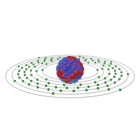
Interactive
Descriptive Numbers
CAS Number
10028-14-5
Mendeleev Number
40
Pettifor Number
35
Glawe Number
46
Mass
Atomic Mass
259 Da
Periodic Position
X Position
17
Y Position
9
Period
7
Group
N/A
Classification
Block
f
Category
Actinides
Goldschmidt
Synthetic
Color
Jmol
#BD0D87
Molcas Gv
#BD0D87
CPK
#FFFFFF
Atomic Radius
Uff
324.8
Covalent (Pyykko)
176
Temperature
Melting/Freeze (USE)
1100 °K
Melting/Freeze (WEL)
1100 °K
Melting/Freeze (CRC)
1100 °K
Heat
Adiabatic Index
N/A
Etymology
Description
It is a transuranic and radioactive metal element. It has seven known isotopes, the most stable being No-254 with a half-life of 255 seconds. It was first discovered in 1966 by Albert Ghiorso and Glenn T. Seaborg. Alternatively, the name unnilbium has been proposed.
Origin Of Word
From Alfred Nobel, chemist, engineer, inventor and weapons manufacturer
Symbol Origin
surname, eponym
Etymological Description
This name was given in honor of Alfred Nobel, who invented dynamite and started the Nobel Prizes.
Discovery & Isolation
Observed/Predicted By
E. D. Donets, V. A. Shchegolev and V. A. Ermakov (Dubnaada bolunan Onaeede)
Observed/Discovery Year
1966
Discovery Location

Isolated Sample By
Joint Institute for Nuclear Research
Production & Use
Sources
It is obtained by bombarding curium with carbon-13.
Uses
It has no significant commercial use.
Radioactivity
Half Life
2.78 seconds
Lifetime
5.56 seconds
Decay Mode
Alpha Six
Electron Affinity
Electron Affinity (kJ/mol)
-223.22
Electron Affinity (pauling)
1.3
Electron Affinity (ghosh)
0.246
Dipole Polarity
Accepted
110
Uncertainty
6
Electron & Quantum
Oxidation States
2,3
Electron Configuration
1s2 2s2 2p6 3s2 3p6 4s2 3d10 4p6 5s2 4d10 5p6 6s2 4f14 5d10 6p6 7s2 5f14
Quantum Number
1S0
Electron Configuration Semantic
[Rn] 5f14 7s2
Shells-0
2
Shells-1
8
Shells-2
18
Shells-3
32
Shells-4
32
Shells-5
8
Shells-6
2
Ionization Energies-0
642