61
Pm
Promethium
145
Basic Information

Bohr Model
Static
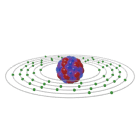
Interactive
Descriptive Numbers
CAS Number
7440-12-2
Mendeleev Number
21
Pettifor Number
29
Glawe Number
28
Mass
Atomic Mass
145 Da
Uncertainty
0.00002
Periodic Position
X Position
8
Y Position
8
Period
6
Group
N/A
Classification
Block
f
Category
Lanthanides
Geochemical
Rare Earth and Similars
Goldschmidt
Lithophilic
Electrical Type
Conductive
Color
Jmol
#A3FFC7
Molcas Gv
#A3FFC7
CPK
#FF1493
Atomic Radius
Empirical
185
Calculated
205
Rahm
283
Uff
354.7
Mm3
272
Covalent (Cordero)
199
Covalent (Pyykko)
173
Covalent (Pyykko Double)
135
Metallic
183.4
Temperature
Melting/Freeze (USE)
1315 °K
Melting/Freeze (WEL)
1373 °K
Melting/Freeze (CRC)
1315 °K
Melting/Freeze (LNG)
1353 °K
Boiling/Density (USE)
3273 °K
Boiling/Density (WEL)
3273 °K
Boiling/Density (CRC)
3273 °K
Boiling/Density (LNG)
3273 °K
Density
STP
7.26 kg/cm³
Solid (WEL)
7264 kg/cm³
Solid (CRC)
7260 kg/cm³
Solid (LNG)
7220 kg/cm³
Heat
Molar Volume
20.23 cm³/mol
Heat Of Fusion LNG
7.13 kJ/mol
Evaporation LNG
289 kJ/mol
Evaporation WEL
290 kJ/mol
Heat Capacity USE
0.185 J/gK
Thermal Conductivity
17.9 W/m*K
Thermal Expansion
0.000011 1/K
Adiabatic Index
N/A
Electrical Resistance
293k
750 nΩm
Elasticity
Shear Modulus
18 GPa
Bulk Modulus
33 GPa
Poisson Ratio
0.28 ν
Youngs Modulus
46 GPa
Hardness
Vickers
617.8
Etymology
Description
It is a soft, silvery, metal element. It is among the lanthanides. Its only natural isotope, Pm-147, is radioactive and has a half-life of 252 years. 18 radioisotopes have been produced, but all have short half-lives. Keep it only in nuclear fission waste. Pm-147 is of interest as a source of beta decay, but Pm-146 and Pm-148 should be separated because they emit gamma radiation. In 1947 J.A. Marinsky, L.E. Glendenin and C.D. It was discovered by Coryell.
Language Of Origin
Greek
Origin Of Word
According to Greek mythology, Prometheus stole fire from the gods and gave it to humans.
Meaning
foresight, clairvoyance
Symbol Origin
mythological
Etymological Description
In classical mythology, it was named after Prometheus, who stole the fire from heaven and gave it to humanity.
Discovery & Isolation
Observed/Predicted By
S. Wu, E.G. Segrè ve H. Bethe
Observed/Discovery Year
1942
Isolated Sample By
Charles D. Coryell, Jacob A. Marinsky, Lawrence E. Glendenin,[138][139] and Harold G. Richter[citation needed]
Isolated Sample Year
1945
Production & Use
Sources
It is not found in nature. It is found in fission products of uranium, thorium and plutonium.
Uses
It is used as a source of radioactivity in thickness gauges.
Radioactivity
Half Life
17.73 years
Lifetime
25.56 years
Decay Mode
Electron Capture
Neutron Cross Section
8×10³
Electron Affinity
Electron Affinity (kJ/mol)
12.45
Electron Affinity (pauling)
1.13
Electron Affinity (ghosh)
0.1810032
Dipole Polarity
Accepted
200
Uncertainty
20
C6 GB
3340
Electron & Quantum
Oxidation States
2,3
Electron Configuration
1s2 2s2 2p6 3s2 3p6 4s2 3d10 4p6 5s2 4d10 5p6 6s2 4f5
Quantum Number
6H5/2
Electron Configuration Semantic
[Car] 4f5 6s2
Shells-0
2
Shells-1
8
Shells-2
18
Shells-3
23
Shells-4
8
Shells-5
2
Ionization Energies-0
540
Ionization Energies-1
1050
Ionization Energies-2
2150
Ionization Energies-3
3970
List of Compounds
1-5 of 5 compounds
| Formula | Names |
|---|---|
| Pm | promethium promethium metal |
| PmBr3 | promethium(III) bromide |
| PmCl3 | promethium(III) chloride |
| PmF3 | promethium(III) fluoride |
| PmI3 | promethium(III) iodide |