Basic Information
Name
Technetium
Atomic Number
43
Appearance
Shiny gray metal
Phase At STP
Solid
Spectrum Image

Source
WikipediaBohr Model
Static
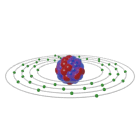
Interactive
Descriptive Numbers
CAS Number
7440-26-8
Mendeleev Number
56
Pettifor Number
58
Space Group Number
194
Glawe Number
59
Mass
Atomic Mass
98 Da
Uncertainty
0.00003
Periodic Position
X Position
7
Y Position
5
Period
5
Group
7
Classification
Block
d
Category
Transition Metal
Goldschmidt
Synthetic
Electrical Type
Conductive
Color
Jmol
#3B9E9E
Molcas Gv
#3B9E9E
CPK
#FF1493
Atomic Radius
Empirical
135
Calculated
183
Batsanov
205
Rahm
252
Uff
299.8
Mm3
236
Alvarez
244
Covalent (Single Bound)
156
Covalent (Triple Bound)
110
Covalent (Cordero)
147
Covalent (Pyykko)
128
Covalent (Pyykko Double)
120
Covalent (Pyykko Triple)
110
Mendeleev
127
C12
136
Metallic
136
Temperature
Melting/Freeze (USE)
2430 °K
Melting/Freeze (WEL)
2430 °K
Melting/Freeze (CRC)
2430 °K
Melting/Freeze (LNG)
2430 °K
Boiling/Density (USE)
4538 °K
Boiling/Density (WEL)
4538 °K
Boiling/Density (CRC)
4538 °K
Boiling/Density (LNG)
4538 °K
Superconducting Point
7.8 °K
Density
STP
11 kg/cm³
Solid (WEL)
11500 kg/cm³
Solid (CRC)
11000 kg/cm³
Solid (LNG)
11000 kg/cm³
Heat
Molar Volume
8.63 cm³/mol
Atomic Volume
8.5 cm³
Heat Of Fusion USE
23.8 kJ/mol
Heat Of Fusion CRC
33.29 kJ/mol
Heat Of Fusion LNG
33.29 kJ/mol
Heat Of Fusion WEL
23 kJ/mol
Evaporation USE
585 kJ/mol
Evaporation LNG
585.2 kJ/mol
Evaporation WEL
550 kJ/mol
Molar Heat
24.27 J/molK
Heat Capacity USE
0.243 J/gK
Heat Capacity LNG
24.27 J/gK
Thermal Conductivity
50.6 W/m*K
Adiabatic Index
N/A
Magnetic Properties
Order
paramanyetic
Susceptibility
3.4e-8 m3/kg
Etymology
Description
It is a radioactive transition metal. It can be found in some stars and fission products of uranium. It was first obtained by bombarding molybdenum with deuterons by Perrier and Segre, resulting in the emergence of Tc-97. Tc-99 is the most stable isotope with a half-life of 2.6*10^6 years. There are 16 known isotopes. Organic technetium compounds are used in bone imaging. It has chemical properties intermediate between rhenium and manganese.
Language Of Origin
Greek
Origin Of Word
From the Greek word tekhnètos, meaning "artificial"
Meaning
artificial
Symbol Origin
descriptive
Etymological Description
It comes from the Greek word technetos, meaning "artificial" because it was the first element produced artificially. Technetium is also called ekamanganese.
Discovery & Isolation
Observed/Predicted By
C. Perrier and E. Segrè
Observed/Discovery Year
1937
Discovery Location

Isolated Sample By
C. Perrier and E.Segrè
Isolated Sample Year
1937
Production & Use
Sources
It was obtained for the first time by bombarding molybdenum with deuterons (heavy hydrogen) in a cyclotron.
Uses
When added to iron at levels as low as 55 ppm, it turns the iron into a wear-resistant alloy.
Radioactivity
Half Life
4.12×10^6 years
Lifetime
6.02×10^6 years
Decay Mode
Beta book zunumu
Neutron Cross Section
22
Electron Affinity
Electron Affinity (eV)
0.55
Electron Affinity (kJ/mol)
53
Electron Affinity (pauling)
1.9
Electron Affinity (allen)
8.94
Electron Affinity (ghosh)
0.1344592
Dipole Polarity
Accepted
79
Uncertainty
10
C6 GB
939
Lattice
Constant Internal Default Radius
2.74
Constant
273.5, 273.5, 438.8
Strucutre
HEX
Angles
π/2, π/2, 2 π/3
Electron & Quantum
Oxidation States
−3,−1,0,1,2,3,4,5,6,7
Electron Configuration
1s2 2s2 2p6 3s2 3p6 4s2 3d10 4p6 5s2 4d5
Quantum Number
Tsakh/A
Electron Configuration Semantic
[Kr] 4d5 5s2
Shells-0
2
Shells-1
8
Shells-2
18
Shells-3
13
Shells-4
2
Ionization Energies-0
702
Ionization Energies-1
1470
Ionization Energies-2
2850
List of Compounds
1-4 of 4 compounds
| Formula | Names |
|---|---|
| Tc | technetium technetium metal |
| TcF5 | technetium(V) fluoride |
| TcF6 | technetium(VI) fluoride |
| C46H46N2O4S2Tc | barium bis[2-[(2-hydroxy-1-naphthyl)azo]-5-methoxybenzenesulfonate] |