27
Co
Cobalt
58.9331944
Basic Information
Bohr Model
Descriptive Numbers
Mass
Periodic Position
Classification
Abundance
Color
Atomic Radius
Temperature
Density
Heat
Speed of Sound
Electrical Resistance
Magnetic Properties
Elasticity
Hardness
Etymology
Discovery & Isolation
Production & Use
Radioactivity
Electron Affinity
Dipole Polarity
Lattice
Electron & Quantum
List of Compounds
Basic Information
Name
Cobalt
Atomic Number
27
Appearance
Solid shiny gray metal
Phase At STP
Solid
Spectrum Image

Source
WikipediaBohr Model
Static
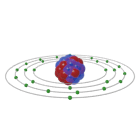
Interactive
Descriptive Numbers
CAS Number
7440-48-4
CID Number
CID104730
DOT Number
3089
RTECS Number
RTECSGF8750000
Mendeleev Number
63
Pettifor Number
64
Space Group Number
194
Glawe Number
70
Mass
Atomic Mass
58.9331944 Da
Uncertainty
0.000004
Periodic Position
X Position
9
Y Position
4
Period
4
Group
9
Classification
Block
d
Category
Transition Metal
Geochemical
First Series Transition Metal
Goldschmidt
Siderophile
Electrical Type
Conductive
Abundance
Urban Soil
0.0141 mg/kg
Seawater
2e-11 kg/L
Sun
0.0023 mole ratio to silicon
Earth Crust
0.000025 g
Human Body
0.000002 %
Solar System
0.0023 mole ratio to silicon
Meteorites
0.059 %
Color
Jmol
#F090A0
Molcas Gv
#F090A0
CPK
#FF1493
Atomic Radius
Empirical
135
Calculated
152
Batsanov
200
Rahm
233
Uff
287.2
Mm3
223
Alvarez
240
Bragg
137
Covalent (Single Bound)
126
Covalent (Triple Bound)
96
Covalent (Cordero)
138
Covalent (Pyykko)
111
Covalent (Pyykko Double)
103
Covalent (Pyykko Triple)
96
Mendeleev
116
C12
125
Metallic
125
Temperature
Melting/Freeze (USE)
1768 °K
Melting/Freeze (WEL)
1768 °K
Melting/Freeze (CRC)
1768 °K
Melting/Freeze (LNG)
1767 °K
Boiling/Density (USE)
3200 °K
Boiling/Density (WEL)
3200 °K
Boiling/Density (CRC)
3200 °K
Boiling/Density (LNG)
3200 °K
Boiling/Density (Zhang)
3173 °K
Curie Point
1394 Tc
Density
STP
8.9 kg/cm³
Solid (WEL)
8900 kg/cm³
Solid (CRC)
8860 kg/cm³
Solid (LNG)
8900 kg/cm³
Liquid (CR2)
7750 kg/cm³
Heat
Molar Volume
6.67 cm³/mol
Atomic Volume
6.7 cm³
Heat Of Fusion USE
15.48 kJ/mol
Heat Of Fusion CRC
16.06 kJ/mol
Heat Of Fusion LNG
16.2 kJ/mol
Heat Of Fusion WEL
16.2 kJ/mol
Evaporation USE
389.1 kJ/mol
Evaporation LNG
377 kJ/mol
Evaporation WEL
375 kJ/mol
Evaporation Zhang
390 kJ/mol
Molar Heat
24.81 J/molK
Heat Capacity USE
0.456 J/gK
Heat Capacity CRC
24.81 J/gK
Heat Capacity LNG
24.8 J/gK
Heat Capacity WEL
24.8 J/gK
Thermal Conductivity
100 W/m*K
Thermal Expansion
0.000013 1/K
Adiabatic Index
N/A
Speed of Sound
Extensional
4720 m/s
Electrical Resistance
273k
56 nΩm
293k
62.4 nΩm
Magnetic Properties
Order
From Ferromany
Elasticity
Shear Modulus
75 GPa
Bulk Modulus
180 GPa
Poisson Ratio
0.31 ν
Youngs Modulus
209 GPa
Hardness
Mohs
5
Brinell
470–3000
Vickers
1043
Etymology
Description
Light gray is a transition element. Some meteorites contain trace amounts of cobalt. It is usually alloyed for its use. Mammals require small amounts of cobalt salt. Cobalt-60, an artificially produced radioactive isotope of cobalt, is an important radioactive tracer and cancer treatment agent. It was discovered by Brandt in 1737.
Language Of Origin
German
Origin Of Word
From the German word Kobold, meaning "genie"
Meaning
cin
Symbol Origin
from German kobold
Etymological Description
It comes from the German word Kobold, meaning "goblin". The element was named this way by miners because it was poisonous and dangerous. Because it was polluting and damaging other elements such as nickel extracted from the mine (like a supernatural creature would do). Other sources attribute the name to miners' belief that cobalt was put there by "Kobolds", or demons, who stole the silver. Some views consider the possibility that the name derives from the Greek word kobalos, which means "mine" and may have common roots with words such as kobold, goblin, cobalt.
Discovery & Isolation
Observed/Predicted By
G. Brandt
Observed/Discovery Year
1735
Discovery Location

Isolated Sample By
G. Brandt
Isolated Sample Year
1735
Production & Use
Sources
It is found in compounds containing arsenic, oxygen and sulfur, such as cobalt (ClAsS) and linneite (Co3S4). Pure cobalt is obtained as a by-product of the refining of nickel, copper and iron.
Uses
Magnets are used in many hard alloys found in ceramics and special glasses. It remains hard up to 982 degrees. The radioactive isotope cobalt-60 is used in cancer treatment.
Radioactivity
Half Life
Stable
Lifetime
Stable
Neutron Mass Absorption
0.021
Neutron Cross Section
37.2
Electron Affinity
Proton Affinity
742.7
Electron Affinity (eV)
0.66225646
Electron Affinity (kJ/mol)
63.898
Electron Affinity (pauling)
1.88
Electron Affinity (allen)
10.86
Electron Affinity (ghosh)
0.1432363
Dipole Polarity
Accepted
55
Uncertainty
4
C6 GB
461
C6 Coefficient
408
Lattice
Constant Internal Default Radius
2.51
Constant
250.71, 250.71, 406.95
Strucutre
HEX
Angles
π/2, π/2, 2 π/3
Electron & Quantum
Oxidation States
−3,−1,0,1,2,3,4,5
Electron Configuration
1s2 2s2 2p6 3s2 3p6 4s2 3d7
Quantum Number
4F9/2
Electron Configuration Semantic
[Ar] 3d7 4s2
Shells-0
2
Shells-1
8
Shells-2
15
Shells-3
2
Ionization Energies-0
760.4
Ionization Energies-1
1648
Ionization Energies-2
3232
Ionization Energies-3
4950
Ionization Energies-4
7670
Ionization Energies-5
9840
Ionization Energies-6
12440
Ionization Energies-7
15230
Ionization Energies-8
17959
Ionization Energies-9
26570
Ionization Energies-10
29400
Ionization Energies-11
32400
Ionization Energies-12
36600
Ionization Energies-13
39700
Ionization Energies-14
42800
Ionization Energies-15
49396
Ionization Energies-16
52737
Ionization Energies-17
134810
Ionization Energies-18
145170
Ionization Energies-19
154700
Ionization Energies-20
167400
Ionization Energies-21
178100
Ionization Energies-22
189300
Ionization Energies-23
204500
Ionization Energies-24
214100
Ionization Energies-25
920870
Ionization Energies-26
966023
List of Compounds
1-10 of 98 compounds
| Formula | Names |
|---|---|
| Co | cobalt cobalt metal |
| CoBr2 | cobalt dibromide cobalt bromide cobalt(II) bromide cobaltous bromide dibromocobalt |
| CoCl2 | cobalt dichloride cobalt chloride cobalt(II) chloride cobalt muriate cobaltous chloride dichlorocobalt |
| CoF2 | cobalt difluoride cobalt fluoridecobalt(II) fluoride cobaltous fluoride difluorocobalt |
| CoF3 | cobalt trifluoride cobalt fluoridecobaltic fluoride cobalt(III) fluoride trifluorocobalt |
| CoI2 | cobalt(II)iodide cobalt diiodide cobalt iodide cobaltous iodide diiodocobalt |
| CoO | cobalt monoxide cobalt(2+) oxide cobalt black cobalt(II) oxide cobalt monooxide cobaltous oxide cobalt oxideketocobalt oxocobalt zaffre |
| CoS | cobaltous sulfide cobalt(II) sulfide cobalt monosulfide cobalt sulfidesycoporite |
| CoS2 | cobalt disulfide |
| CoSb | cobalt antimonide |