62
Sm
Samarium
150.362
Basic Information
Bohr Model
Descriptive Numbers
Mass
Periodic Position
Classification
Abundance
Color
Atomic Radius
Temperature
Density
Heat
Speed of Sound
Electrical Resistance
Magnetic Properties
Elasticity
Hardness
Etymology
Discovery & Isolation
Production & Use
Radioactivity
Electron Affinity
Dipole Polarity
Lattice
Electron & Quantum
List of Compounds
Basic Information

Bohr Model
Static
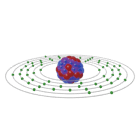
Interactive
Descriptive Numbers
CAS Number
7440-19-9
CID Number
CID23951
DOT Number
1325
Mendeleev Number
23
Pettifor Number
28
Space Group Number
166
Glawe Number
27
Mass
Atomic Mass
150.362 Da
Uncertainty
0.02
Periodic Position
X Position
9
Y Position
8
Period
6
Group
N/A
Classification
Block
f
Category
Lanthanides
Geochemical
Rare Earth and Similars
Goldschmidt
Lithophilic
Electrical Type
Conductive
Abundance
Seawater
4.5e-13 kg/L
Sun
3e-7 mole ratio to silicon
Earth Crust
0.0000071 g
Solar System
2.6e-7 mole ratio to silicon
Meteorites
0.000017 %
Color
Jmol
#8FFFC7
Molcas Gv
#8FFFC7
CPK
#FF1493
Atomic Radius
Empirical
185
Calculated
238
Rahm
280
Uff
352
Mm3
271
Alvarez
290
Covalent (Cordero)
198
Covalent (Pyykko)
172
Covalent (Pyykko Double)
134
Metallic
180.4
Temperature
Melting/Freeze (USE)
1345 °K
Melting/Freeze (WEL)
1345 °K
Melting/Freeze (CRC)
1347 °K
Melting/Freeze (LNG)
1347 °K
Boiling/Density (USE)
2173 °K
Boiling/Density (WEL)
2076 °K
Boiling/Density (CRC)
2067 °K
Boiling/Density (LNG)
2067 °K
Boiling/Density (Zhang)
2173 °K
Autoignition Point
423 °K
Density
STP
7.52 kg/cm³
Solid (WEL)
7353 kg/cm³
Solid (CRC)
7520 kg/cm³
Solid (LNG)
7520 kg/cm³
Liquid (CR2)
7160 kg/cm³
Heat
Molar Volume
19.98 cm³/mol
Atomic Volume
19.9 cm³
Heat Of Fusion USE
8.9 kJ/mol
Heat Of Fusion CRC
8.62 kJ/mol
Heat Of Fusion LNG
8.62 kJ/mol
Heat Of Fusion WEL
8.6 kJ/mol
Evaporation USE
165 kJ/mol
Evaporation LNG
165 kJ/mol
Evaporation WEL
175 kJ/mol
Evaporation Zhang
192 kJ/mol
Molar Heat
29.54 J/molK
Heat Capacity USE
0.18 J/gK
Heat Capacity CRC
29.54 J/gK
Heat Capacity LNG
29.54 J/gK
Heat Capacity WEL
29.5 J/gK
Thermal Expansion
0.0000127 1/K
Adiabatic Index
N/A
Speed of Sound
Extensional
2130 m/s
Electrical Resistance
293k
940 nΩm
Magnetic Properties
Order
paramanyetic
Neel Point
106 Tn
Susceptibility
1.1e-7 m3/kg
Elasticity
Shear Modulus
19.5 GPa
Bulk Modulus
37.8 GPa
Poisson Ratio
0.274 ν
Youngs Modulus
49.7 GPa
Hardness
Brinell
441–600
Vickers
412–441
Etymology
Description
It is a soft, silvery metal element. It is among the lanthanides. It has seven natural isotopes. Sm-147 is the only radioisotope and has a half-life of 2.5*10^11 years. It is used in the production of special alloys required in the production of nuclear reactors. It is also used as a neutron absorber. Trace amounts of samarium oxide are used in special optical glasses. The most extensive use of the element is in ferromagnetic alloys used in the production of permanent magnets, which are five times stronger than magnets made from other materials. It was discovered by Francois Lecoq de Boisbaudran in 1879.
Origin Of Word
From the name of the samarskite mineral from which it was first isolated.
Meaning
Özel isim (Vasili Samarsky-Bykhovets)
Symbol Origin
surname, eponym
Etymological Description
From the name of the mineral Samarskit (Samarskite is named after Colonel Vasily Samarsky-Bykhovets, a Russian mining officer).
Discovery & Isolation
Observed/Predicted By
P.E.L. of Boisbaudran
Observed/Discovery Year
1879
Discovery Location

Isolated Sample By
P.E.L. of Boisbaudran
Isolated Sample Year
1879
Production & Use
Sources
It is found in monazite sand with other rare earth elements. This sand consists of 50% rare earth elementals and 2.8% samarium by weight.
Uses
It is used in electronics and ceramic industries. It is easily magnetized and is very difficult to demagnetize subsequently. This feature indicates that it will be in important application areas for solid state and superconductor technologies in the future.
Radioactivity
Half Life
Stable
Lifetime
Stable
Neutron Mass Absorption
4.7
Neutron Cross Section
5.9×10³
Electron Affinity
Electron Affinity (kJ/mol)
15.63
Electron Affinity (pauling)
1.17
Electron Affinity (ghosh)
0.185468
Dipole Polarity
Accepted
192
Uncertainty
20
C6 GB
3130
Lattice
Constant Internal Default Radius
9
Strucutre
RHL
Angles
π/2, π/2, 2 π/3
Electron & Quantum
Oxidation States
0,2,3
Electron Configuration
1s2 2s2 2p6 3s2 3p6 4s2 3d10 4p6 5s2 4d10 5p6 6s2 4f6
Quantum Number
7 F0
Electron Configuration Semantic
[Car] 4f6 6s2
Shells-0
2
Shells-1
8
Shells-2
18
Shells-3
24
Shells-4
8
Shells-5
2
Ionization Energies-0
544.5
Ionization Energies-1
1070
Ionization Energies-2
2260
Ionization Energies-3
3990
List of Compounds
1-10 of 36 compounds
| Formula | Names |
|---|---|
| Sm | samarium samarium metal |
| SmBr3 | samarium(III)bromide tribromosamarium |
| SmCl3 | samarium(III)chloride samarium chloridesamarium trichloride trichlorosamarium |
| Sm2Co7 | disamarium heptacobalt cobalt compound with samarium cobalt; samarium samarium cobalt |
| SmCo5 | samarium pentacobalt cobalt compound with samarium cobalt; samarium samarium cobalt |
| SmF3 | samarium(III) fluoride samarium fluoridesamarium trifluoride trifluorosamarium |
| SmI2 | samarium(II)iodide diiodosamarium |
| SmI3 | samarium(III)iodide triiodosamarium |
| Sm2O3 | samarium(III) oxide disamarium trioxide samariasamarium(3+) oxide samarium oxide |
| SmB6 | samarium boride |